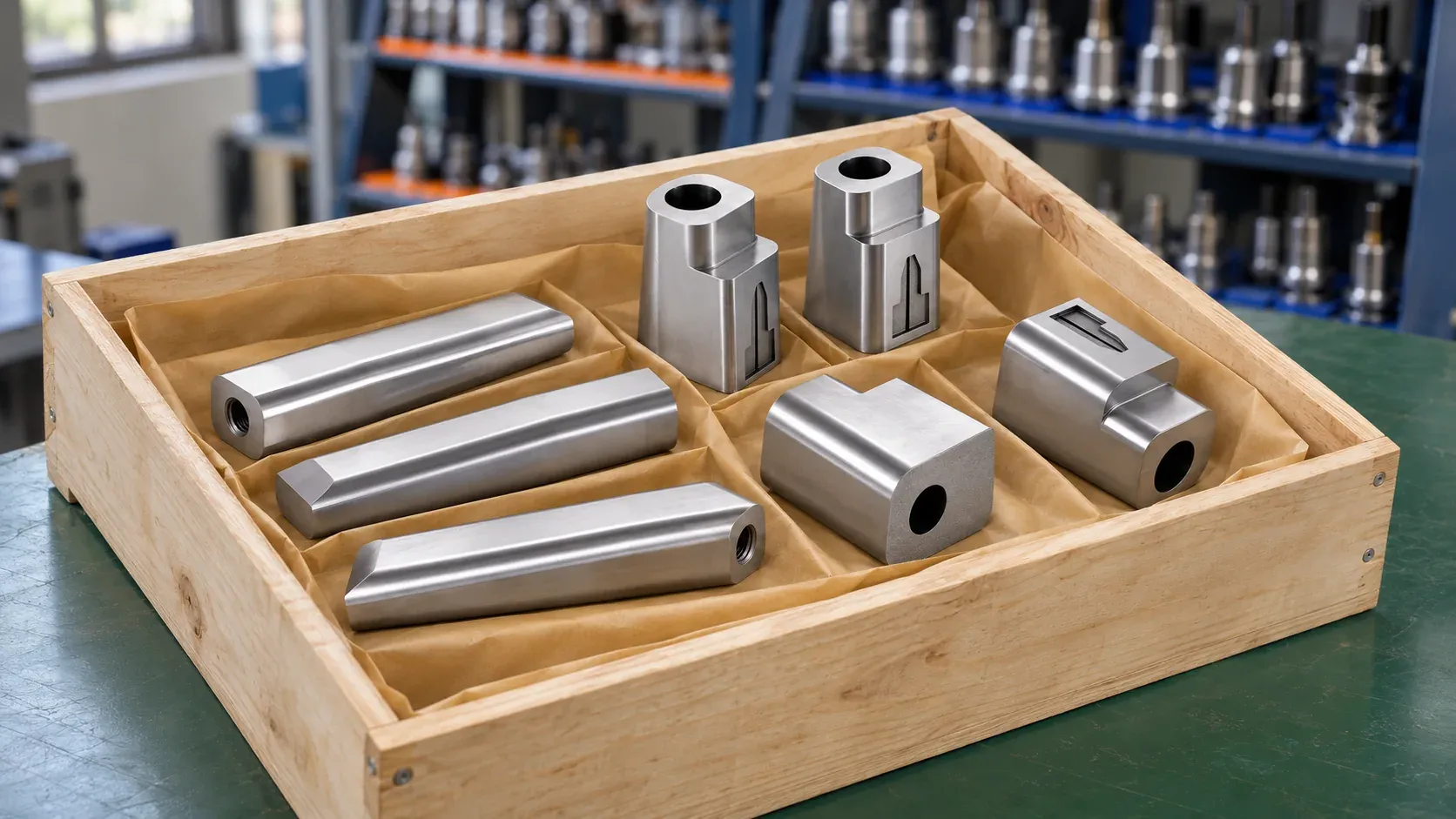
When a mould shop's production schedule is full, non-standard parts such as straight lifters, angled lifters, sliders, and inserts can be outsourced to Taizhou Migaomi Moulding Co., Ltd. This article explains which parts are suitable for outsourcing, which should stay in-house for fitting, how lead…
When a mould shop's schedule is tight and both CNC and wire EDM machines are fully booked, non-standard parts such as straight lifters, angled lifters, sliders, and inserts can be outsourced to MGM. Taizhou Migaomi Moulding Co., Ltd is a factory in Taizhou that machines non-standard parts for injection mould makers and trading companies. The mould shop sends over the machining data, and MGM processes, inspects, and returns finished parts as agreed.
Which parts to outsource and which to keep in-house is not a preset decision. MGM does not assume that outsourcing an entire order is always cheaper. Instead, it reviews each order together with the mould shop and divides the work by part and by process step. Its production facility is located in Linhai, Taizhou.
Which Parts Can Be Outsourced?
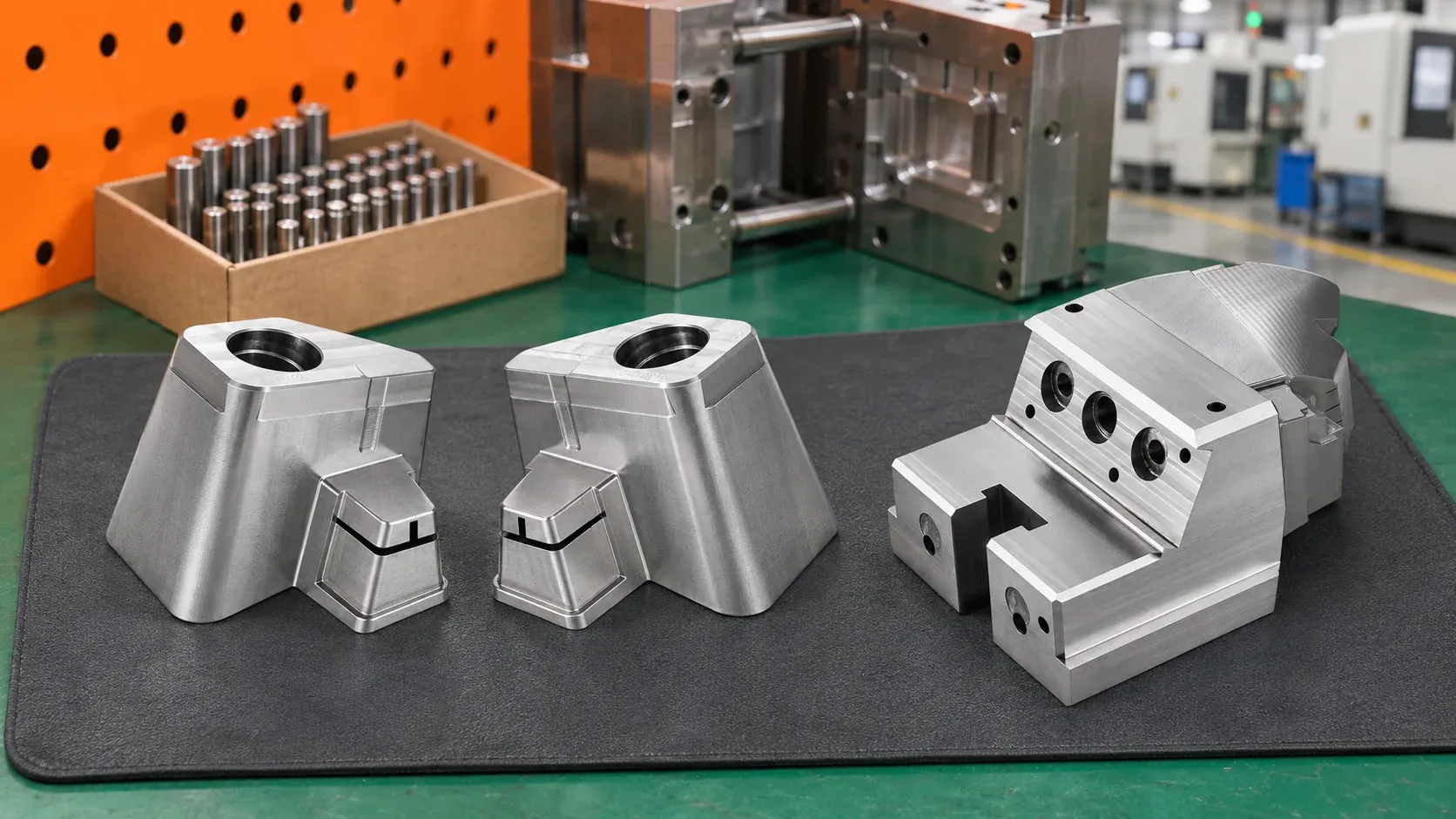
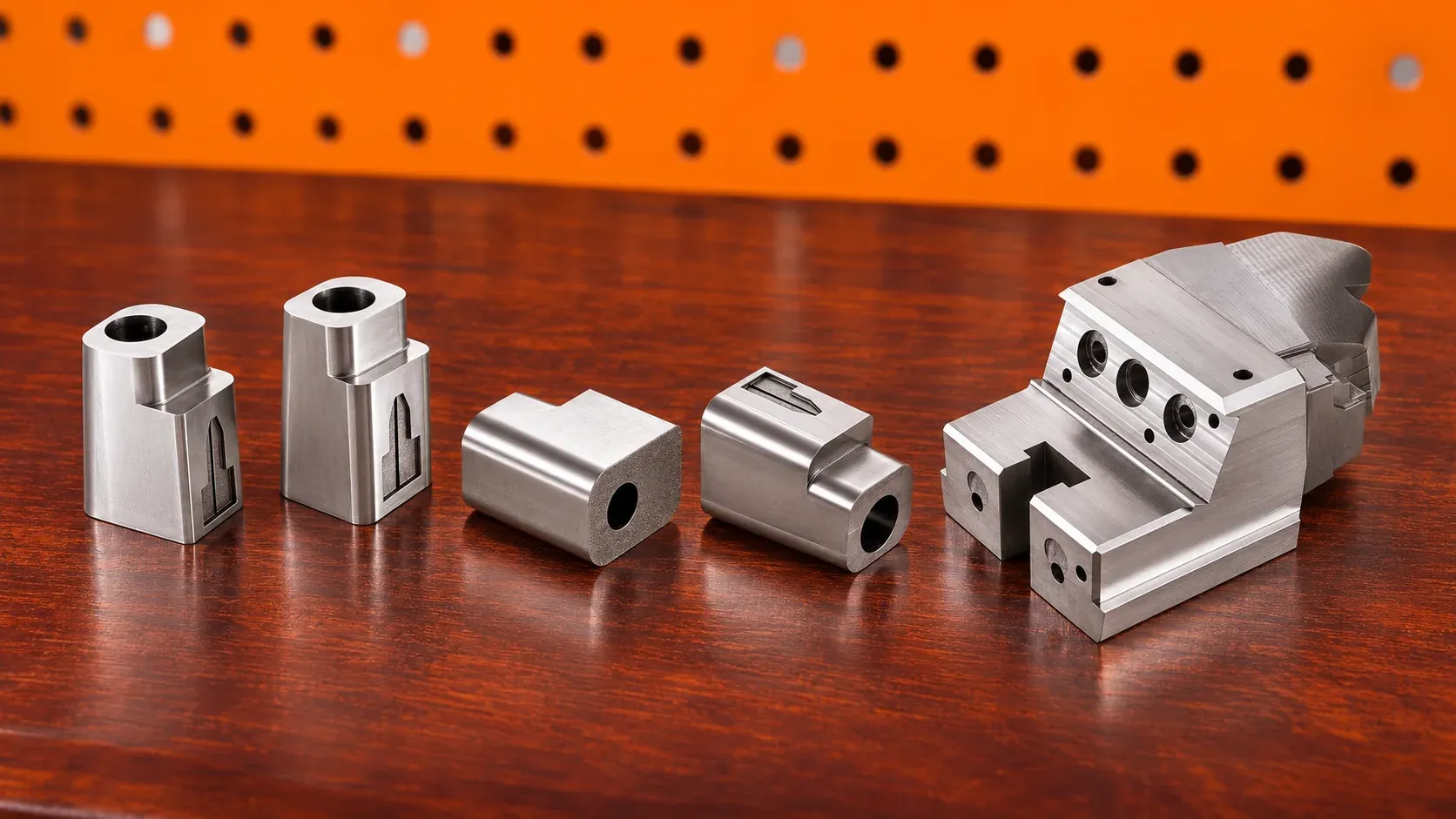
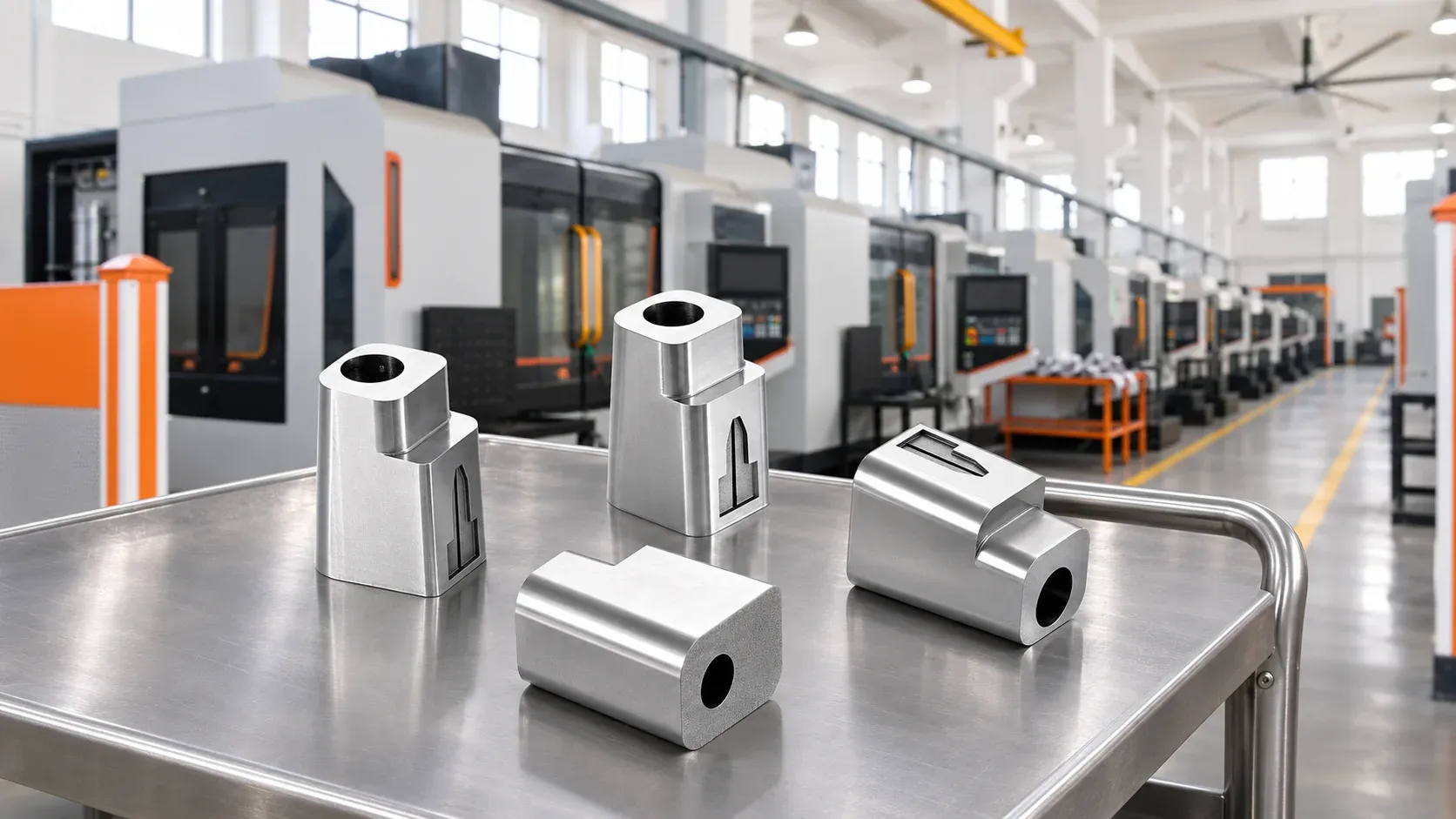
The main categories are four types of non-standard parts used in injection moulds: straight lifters, angled lifters, sliders, and inserts. Parts needed for a new mould build can be sent over, and replacement parts for maintenance are also accepted as long as machining data is available.
The confirmed machining envelope for straight lifters, sliders, and inserts is 200mm × 200mm × 200mm, with a finished machining tolerance of ±0.02mm. For any specific drawing, the actual feasibility depends on the material, geometry, and data. Angled lifters are evaluated based on the body dimensions and mating data; whether 5-axis machining is used is determined during that evaluation.
If a part assembly requires certain standard components, those can be included in the same order and coordinated together.
When the Shop Is Full: What to Outsource and What to Keep?
Before outsourcing, MGM reviews four things with the mould shop: how much capacity is still available on the schedule, how manpower is allocated, which parts need to stay in-house for fitting, and which external delivery deadlines must be met. Only after this review are the specific parts and process steps for outsourcing decided.
A practical rule of thumb: parts with complete data, clear geometry, and higher quantities are easier to outsource as whole pieces. Parts that require fitting and adjustment during assembly can have only the body machining outsourced, with fitting kept in-house.
When a new mould build is on a tight timeline, the overall mould progresses as planned while the agreed non-standard parts are machined externally in parallel. At the time of ordering, align the delivery date of each part type with its assembly sequence, and split deliveries into batches if needed.
How Are Lead Times Determined?
When setting a lead time, the commercial team first asks the mould shop when it needs the parts. The process and production teams then review the part geometry, complexity, quantity, and existing workload. Once confirmed, the delivery date is written into the order.
For urgent orders, the first step is to check how much slack remains in the current schedule, then discuss options such as splitting the work, adjusting machine allocation, or coordinating external resources. If the quantity is too large or the geometry too complex to handle within available capacity, the order may not be accepted even at a higher price — so the sooner drawings are sent for evaluation, the better.
If drawings are revised or quantities are increased after an order is placed, the lead time is reconfirmed based on how far machining has progressed. If a delay is expected, the reason and additional time required are communicated, and a new delivery date is agreed upon.
Which Operations Are Done In-House and Which Are Subcontracted?
The shop has 3-axis, 4-axis, and 5-axis CNC machines, as well as EDM, wire EDM, hole-drilling EDM, a CMM, and milling, grinding, and sawing equipment. As of the 2026 equipment register, there are 5 high-speed 3-axis machining centers, 8 high-speed 4-axis machines, 5 high-speed 5-axis machines, and 2 vertical high-speed milling machines.
After an order is confirmed, the process department plans material procurement and cutting, then sequences roughing, finishing, EDM, wire EDM, and quality inspection based on part geometry. Where 3-axis or 4-axis machines cannot reach certain features, a 5-axis approach is evaluated against the drawing.
Graphite machining, deep-hole drilling, and heat treatment are subcontracted. Before handover, MGM clearly communicates the customer's requirements and standards to the subcontractor through data and personnel coordination. Confidentiality requirements from the customer are equally upheld when sharing documents externally.
What Gets Checked When Drawings Are Submitted?
You can send existing drawings and requirements first for a technical evaluation of geometry, material, complexity, and machining conditions. If obvious gaps are found, MGM will come back to the mould shop to clarify what is missing and can assist in filling those gaps.
If the 2D and 3D data do not match, or if multiple versions of the same drawing exist, the team first confirms which version will be used for this order before planning the process. If an anomaly is found during machining, the team asks first. If a critical dimension has not yet been approved by the mould shop, work stops until confirmation is received — what gets delivered is the version both parties have agreed on.
How to Handle Insert Fitting When Outsourcing?
When an insert mates with other components, the body machining alone is not enough — the fit must also be verified. If fitting issues arise, MGM can coordinate bench fitting as agreed, using EDM where necessary.
Fitting adds workload. Before placing the order, clarify whether only the body is being outsourced or whether fitting, assembly, and inspection are included as well. Only then will the lead time and acceptance criteria align.
How Are Returned Parts Inspected and Matched?
The acceptance requirements specified by the mould shop are compiled into internal standard documents, used to train machining and inspection staff, and applied to monitor designated features and critical dimensions. Dimensions are then checked against the agreed tolerances.
If a quality report is requested, one is provided and archived. If no report is required, parts are shipped after passing internal sampling inspection. Whether full inspection or sampling is used, and which items the report covers, are agreed upon at the time of ordering.
For batch deliveries, each shipment note lists exactly what is included in that batch. Similar parts are distinguished by part number and marking. Upon receipt, check the part numbers, quantities, and batch information first, then inspect the appearance — this reduces the risk of picking the wrong part during assembly.
When Does This Type of Outsourcing Make Sense?
- Injection mould shops that need multiple types of non-standard parts for a new build, where lead times follow the overall mould schedule and fit is critical;
- Mould shops that urgently need replacement parts for maintenance, have old drawings on hand, and can describe the current condition of the part — the difference between the old drawing and the actual part is verified first, then expedited delivery is discussed;
- Trading companies that coordinate data, pricing, and acceptance between upstream and downstream parties — clarify upfront who signs the contract and who confirms the technical data.
MGM handles the machining and delivery of non-standard parts. The design, final assembly, and tryout of the complete mould remain with the mould shop. This model is best suited to mould shops that already have complete machining data and want to outsource these types of non-standard parts in batches.
Questions to Clarify Before Your First Outsourcing Order
- Which version of the data will be used for machining, and who fills in any missing information?
- Which operations are done in-house and which are subcontracted?
- What is the lead time for each part type, when does it start, and does it include shipping?
- What does the quotation cover, and how are packaging and shipping charged?
- Are fitting and assembly included, and is an inspection report required — if so, which items does it cover?