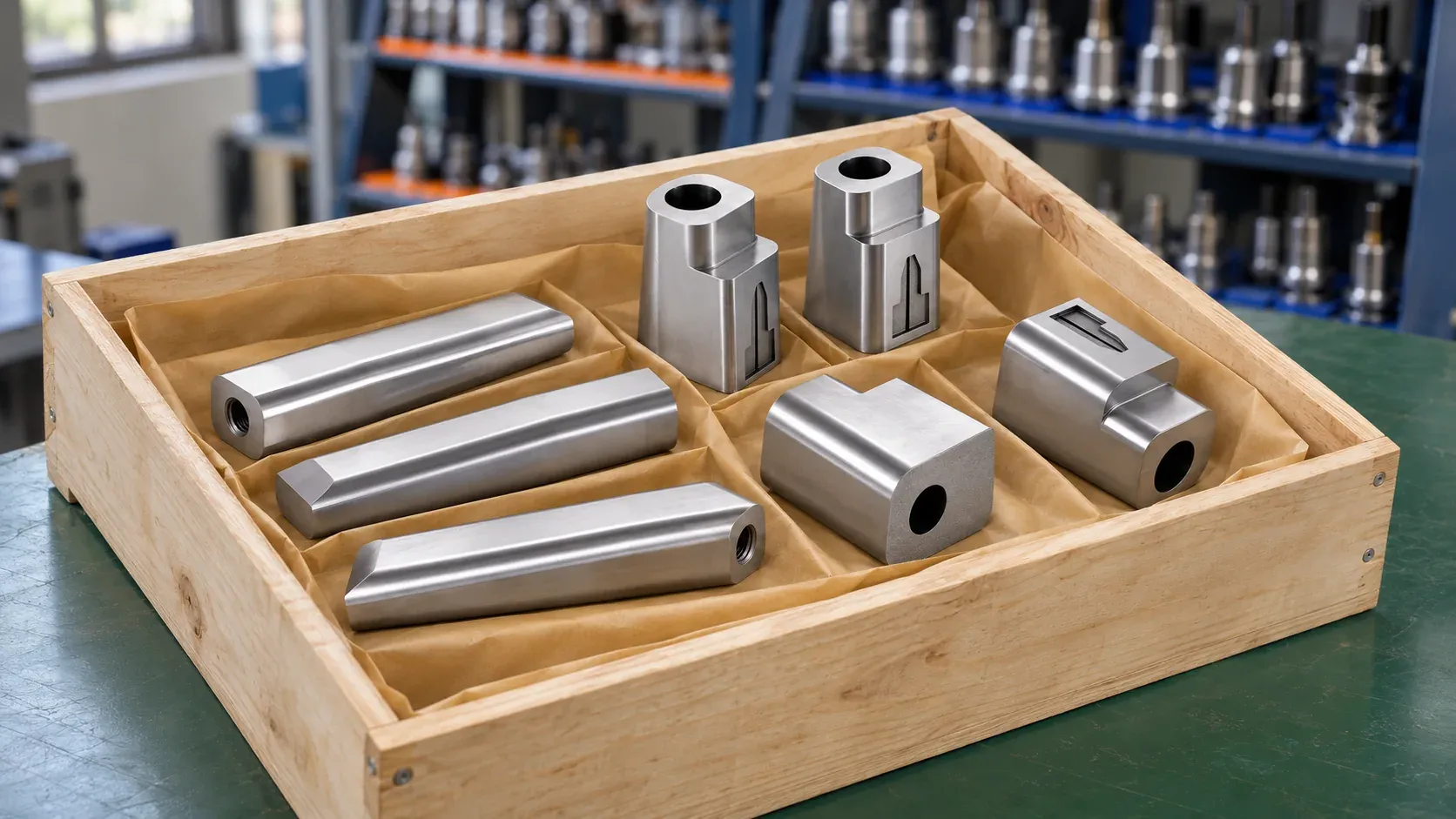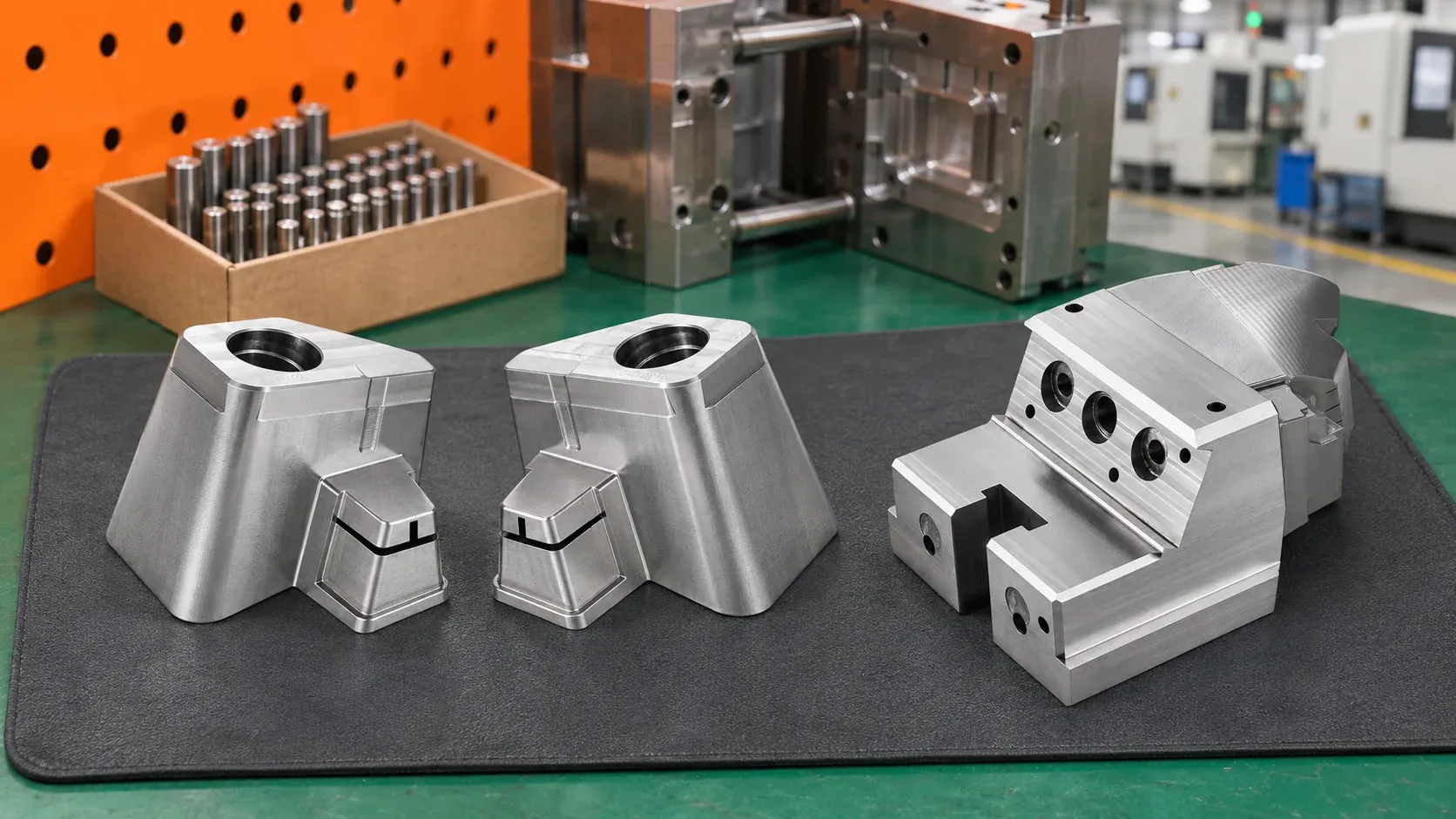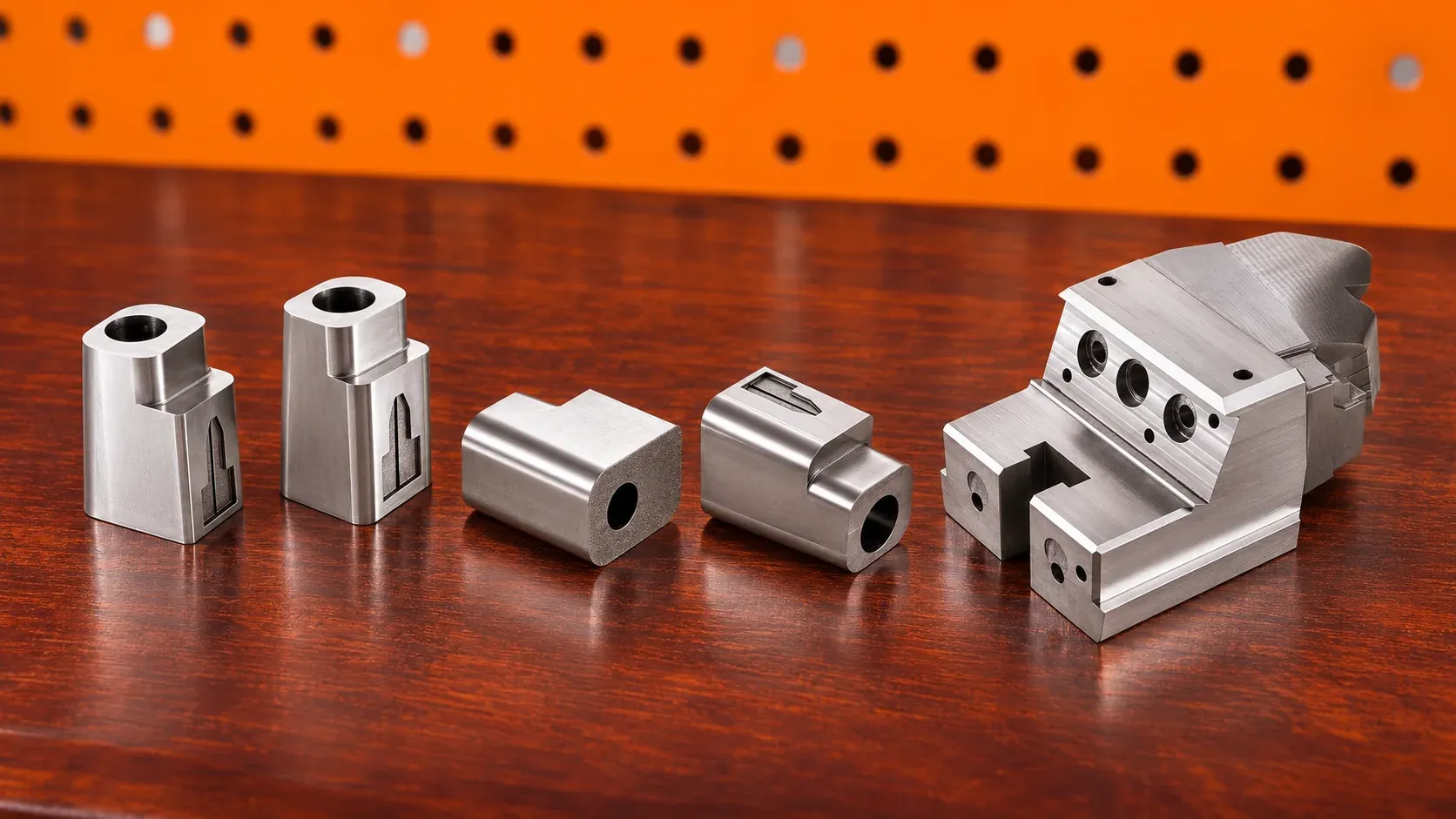
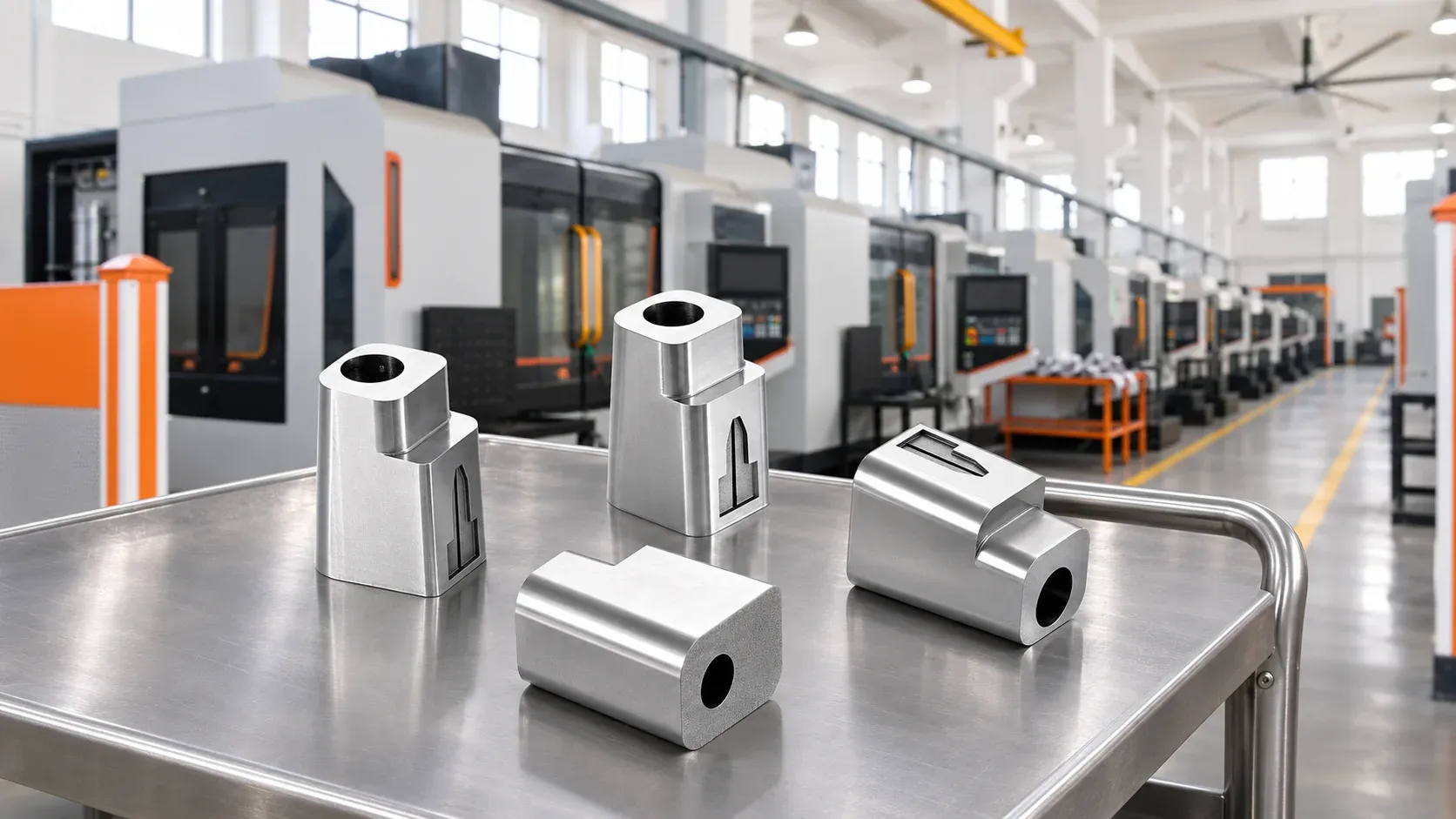
Taizhou Migaomi Moulding Co., Ltd machines straight lifters, angled lifters, sliders, and inserts for injection mold makers and trading companies. The company also handles prototyping and small-batch production of small hardware parts and coordinates supply of selected standard components. This art…
Taizhou Migaomi Moulding Co., Ltd is a factory that machines custom parts for injection mold makers and trading companies. Our main products include straight lifters, angled lifters, sliders, and inserts. The company was established in 2016 and operates in Linhai.
"MGM" is the company's brand. Business starts from complete machining data provided by the customer. Both parties first confirm the machining scope, inspection requirements, and delivery milestones before production is organized.
What Parts Do We Machine?
Straight lifters, angled lifters, sliders, and inserts make up the core of our custom mold component business. Straight lifters are used in new injection molds or as replacement parts where machining data already exists. Customers need to provide material specifications, critical dimensions and datums, quantities, and acceptance criteria.
For angled lifters, we review the structure, mating relationships, and whether the machining positions are accessible, then select the appropriate process based on the specific data and complexity. For sliders, material, heat treatment requirements, and critical dimensions must all be clearly defined. Whether heat treatment is applied and what hardness is specified are confirmed on a per-order basis.
For inserts, the data, datums, and assembly requirements of both the insert body and its mating components must be verified together. Taizhou Migaomi Moulding Co., Ltd can coordinate manual fitting as needed, and where necessary, EDM is used to address mating surfaces. The scope of machining, fitting, and assembly is confirmed before the order is accepted.
What Else Can We Handle Beyond Standard Mold Components?
Taizhou Migaomi Moulding Co., Ltd also takes on prototyping and small-batch production of small hardware parts. For these jobs, the process is selected based on the part data. What items are inspected on the first article, how confirmation is handled, and how subsequent batches are scheduled are all specified in the order.
Conformal cooling channel parts have been delivered in production, manufactured using 3D metal printing. Some processes are outsourced, with finishing completed in-house. Cooling channel testing is carried out per order requirements; specific test items, conditions, and acceptable values are agreed upon in advance.
Certain standard components can be coordinated through suppliers. The specific supplier, part numbers, and supply scope are confirmed on a per-order basis. When combined parts are needed, list the custom parts requiring machining and the standard parts requiring sourcing separately so that delivery items can be verified one by one.
Which Operations Are Done In-House and Which Are Outsourced?
Taizhou Migaomi Moulding Co., Ltd has in-house CNC (3-axis, 4-axis, and 5-axis), EDM, wire EDM, EDM drilling, CMM, and milling, grinding, and sawing equipment. Graphite machining, deep-hole drilling, and heat treatment are outsourced. Whether 5-axis machining is used for angled lifters depends on the part data and complexity of each specific job.
Once an order is confirmed, the process engineering team first arranges material layout and cutting to size, then organizes roughing, finishing, EDM, wire EDM, and quality inspection based on the part structure. Where heat treatment falls in the sequence depends on the material, structure, and order requirements.
Before any outsourced handoff, customer requirements and standards are clearly defined and communicated to the subcontractor through data and personnel handover. Sharing of documentation with external parties must also comply with the customer's confidentiality requirements. For buyers, the process list should clearly state both in-house and outsourced operations so that requirements at each stage can be tracked.
From Machining Data to Production Scheduling — What Is Confirmed First?
Taizhou Migaomi Moulding Co., Ltd can first evaluate the customer's existing drawings and requirements, checking structure, material, complexity, and machining conditions. If technical staff identify obvious gaps, they will discuss these with the customer first. Once the missing information is clarified, we can assist in completing it. Production is based on complete data approved by the customer.
Data revision, material, critical dimensions, tolerances, quantities, acceptance criteria, and desired delivery date are all items that need to be aligned during the review. If anomalies are found during machining, communication comes first. Any critical dimension that has not yet been approved is put on hold.
Commercial, process engineering, and production teams review delivery milestones together based on part complexity, quantities, and existing workload, while also confirming the scope of work and the division between in-house and outsourced operations. Buyers can list their desired part receipt dates alongside downstream assembly schedules as a basis for communication on milestones.
After Parts Are Finished — How Are Inspection and Handover Handled?
Taizhou Migaomi Moulding Co., Ltd compiles customer acceptance requirements into internal standard documents and uses them for training. Focus is placed on inspecting specified features, critical dimensions, and agreed tolerances. When quality reports are required, they are provided and archived. When no report is required, parts are shipped after internal sampling inspection passes.
How the first article is confirmed, whether sampling or 100% inspection is used, which mating dimensions are checked, and what items and format the report includes must all be specified in the order. For combined parts, acceptance is based on the machining, fitting data, and assembly scope confirmed by both parties.
For split deliveries, a packing list details what has been shipped. Similar parts are distinguished by part numbers and markings. Upon receipt and before assembly, verify part numbers, quantities, and batch first, then check dimensions. If a dimensional anomaly is found, we trace back from the finished feature through process data, retrieving machining tool paths if necessary. If measurement results differ between the two parties, we return to the confirmed machining requirements and cross-check using data from both sides.
What Kind of Needs Suit This Type of Machining Support?
Injection mold makers and trading companies whose orders involve multiple types of custom parts, multiple processes, partial component sourcing, or inspection and handover coordination — and who want to reduce the burden of managing scattered suppliers — are a good fit for Taizhou Migaomi Moulding Co., Ltd. Before starting a partnership, list the parts to be delivered, the scope of fitting or assembly, inspection requirements, and split delivery milestones, then confirm the machining plan based on specific data.
When preparing to reach out, you can structure your questions around this parts checklist:
- Which data revision serves as the basis for machining, and which mating dimensions need to be confirmed first?
- Which in-house operations, outsourced operations, and fitting work does this batch of parts include?
- What items are covered in the quotation, and how are inspection reports and delivery documents agreed upon?
- How are machining and delivery milestones determined, and how do split deliveries correspond to the assembly schedule?